Do you need to say 'ad' when you post about your own startup? What 17 UK rulings and the US and EU rules say
I read every ASA ruling I could find where an owner, director, employee or shareholder posted about their own company. In 28 of the 31 posts, the ASA said the post wasn't obviously an ad. Bios, brand tags, 'my' and 'we', own-brand hashtags and 'everyone knows it's mine' all failed. Here's what the UK, US and EU rules ask for, and what that means for founder and team posts on LinkedIn and X.

By Kyle Kirkby
Published | Updated
If you run a startup, most of your marketing probably goes out under your own name. You post about the launch on LinkedIn. You reply on X with a link to your product. Your cofounder shares the customer win, and you ask the team to repost it. A lot of these posts are now drafted with Claude or ChatGPT.
So here's the question this post tries to answer. When you post about your own company from your personal account, do you have to label it as an ad, or say that it's your company?
Most guides on ad labels are written for influencers who get paid by someone else's brand. Founders posting about their own product get a line or two at most. The UK regulator has even said it has no precedent yet for LinkedIn [5]. So I went to the rulings. I searched the Advertising Standards Authority's (ASA) published rulings and read every one I could find where the person posting owned, ran, worked for, held shares in or earned royalties from the brand they were promoting. There were 17, covering 31 posts. I then set them against the US and EU rules.
This is a research summary, not legal advice. The Deynix part is short and near the end.
Executive summary
- In the UK, the ASA nearly always ruled against the post. Of the 31 posts in the 17 rulings, 28 broke the rule that ads must be "obviously identifiable". Two were cleared, and one wasn't an ad at all. The posters included company directors, a creative director, a non-executive director, a shareholder and owners of their own brands [1].
- "Everyone knows it's my company" didn't work. In 7 of the 17 rulings, the ASA said some followers might know about the connection and ruled against the post anyway. Its reason was that posts get shown to people who don't follow you. A founder's bios and a TikTok playlist titled "aggressive marketing" weren't enough either [23].
- Soft signals failed too. The ASA rejected "my" or "we" wording in 7 rulings, a brand handle, link or discount code in 6, and own-brand hashtags such as #myownbrand and #muffboss in 4. The UK's Competition and Markets Authority (CMA) now lists "my products", "mybrand" and "ownbrand" as wording to avoid [6].
- Where the disclosure sits matters. One director's caption made the connection clear on desktop. On mobile, it was cut off behind "more", so the post failed [11]. That matters on LinkedIn, where longer posts get cut off with a "more" link too.
- The US asks a slightly different question. The FTC wants you to disclose your connection to the company if "a significant minority" of the audience wouldn't expect it [31]. Since October 2024, its rule on fake reviews has also covered testimonials by a company's own owners and managers [33]. The EU bans traders from hiding that they're acting for their business, and a 2024 EU check of influencers found that 60% of those promoting their own brand didn't disclose it consistently [37].
- If you ask your team to post, you share the responsibility. The FTC acted against an ad agency whose staff tweeted about a client's console without saying who they worked for [34]. It also acted against a skincare company whose CEO and staff posted reviews of its products [35]. In the UK, the ASA has treated posts made by a director "or on her behalf" as the brand's marketing [15].
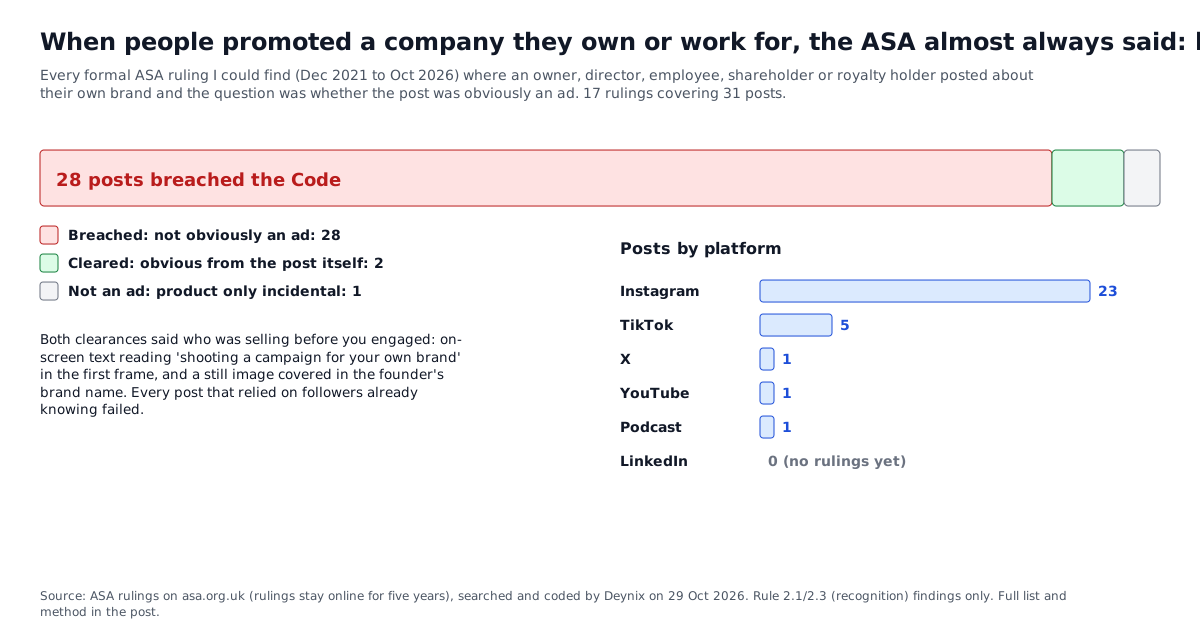
Figure 1. Outcomes of ASA rulings where the poster owned, ran, worked for, held shares in or earned royalties from the brand. Coded from rulings found on asa.org.uk on 29 October 2026. Method below.
When does a founder's post count as an ad?
In the UK, the advertising rules are in the CAP Code, which the ASA enforces. The Code covers paid ads. It also covers some of what a business posts in space it controls, including its own social accounts. The test is whether the post is "directly connected to the supply or transfer of goods, services, opportunities or gifts" [3]. CAP warns that "any content that bears a relationship to the products or services they offer has the potential to be considered directly connected" [4].
This covers people as well as company pages. CAP's guidance says that when someone is "personally or commercially connected to the brand (e.g., 'paid' by, owner, employee, shareholder, director or have any other commercial or personal interest), any content featuring or referring to the brand will need to be obviously identifiable as advertising" [3]. Two rules apply. Rule 2.1 says ads "must be obviously identifiable as such". Rule 2.3 says they must not imply the marketer is "acting as a consumer" and "must make clear their commercial intent, if that is not obvious from the context" [13].
Not every post that mentions your company is an ad. Company accounts get some leeway. When a brand posts on its own account and its name is shown, CAP says that is "generally considered to be obviously identifiable as advertising", so an "Ad" label "is unlikely to be necessary" [3]. The trouble starts when a person's account carries the message, because readers can't tell that the person is selling.
The rules also cover B2B. CAP says they apply to company marketing "whether it's B2C or B2B". It also says the "principle of ensuring advertising is clearly identifiable still applies to all content on LinkedIn, including B2B influencer marketing" [5]. The ASA has ruled on a post on a company's own LinkedIn page [28] and on a promoted LinkedIn post from an ad-buying platform that sells to advertisers [29]. Neither ruling was about whether the post was recognisable as an ad.
UK consumer law adds a second layer. Since 6 April 2025, the Digital Markets, Competition and Consumers Act has banned "falsely claiming or creating the false impression that the trader is not acting for purposes relating to the trader's business" [7]. The CMA can now decide these cases itself and fine a company up to 10% of its global turnover [8]. Its guidance is direct: if you own, co-own, work for or are "otherwise connected with a brand" and promote it, "you must make this known and clearly label these posts as ads" [6].
Finding 1: the ASA nearly always ruled against own-company posts
The 17 rulings run from December 2021 to January 2025 (Figure 1). Four came out on the same day in December 2021. I found none from 2025 after January, and none so far in 2026. All 17 involved consumer brands: clothing, beauty, homeware, drinks, supplements and CBD. None involved a B2B company or LinkedIn.
The people posting were not all influencers with a side business. Four rulings were about company directors posting on their own accounts: Chloe Ferry [10], Jamie Genevieve [11], the director of a Leeds lager brand [12] and the director of a clothing brand [25]. Another was about a paid creative director [13], one about a founder-director [23] and one about a shareholder who wasn't paid for the posts [17]. The lager director's Instagram story simply reshared the brand's own post saying the beer was "Now available at" a local pub. That was enough to breach the Code, because it was "not immediately clear to consumers that he had a commercial interest" from a post on his personal account [12].
The owner of a CBD brand got the same answer on X. He replied to a tweet asking whether one of his products worked for anxiety and insomnia. The ASA said that "from the post itself, it was not clear that Mr Fowler had a commercial interest" [22]. That's worth knowing if you reply to people on X about your own product, which is now a big part of how founders market.
Being a well-known founder didn't help. TALA argued that Grace Beverley was "widely synonymous with the business". It also argued that asking her to label posts on her personal channels, just because a few followers might not know she founded the company, "was unfair". The ASA found against all six posts. It said "information in an individual's social media bio did not amount to sufficient disclosure", and that mentions of "we" and "our pieces" came "part-way through" videos several minutes long [23].
Finding 2: what people relied on, and why it wasn't enough
I coded every cue that the ASA considered and then rejected in each ruling (Figure 2). One ruling can count in several rows.
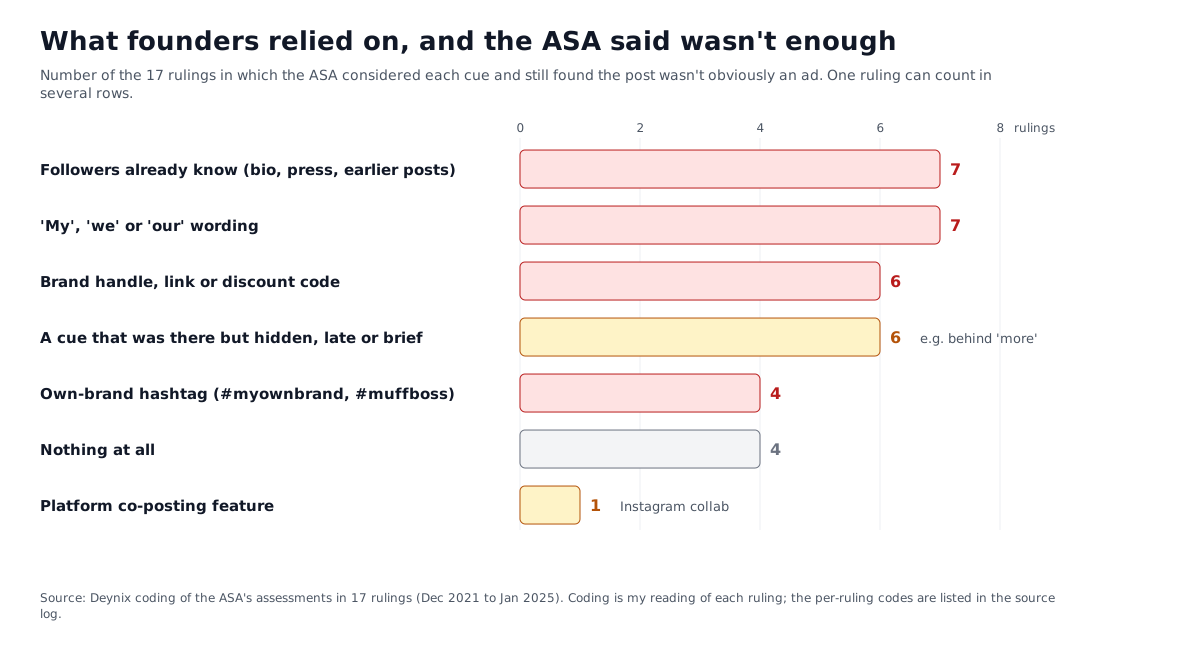
Figure 2. Cues the ASA considered and still found insufficient, coded from the assessment in each of the 17 rulings. My coding; the per-ruling codes are in the methodology section.
Followers already know (7 rulings). This was the most common defence, and it never worked. A shareholder had announced her stake in earlier posts. The ASA accepted that "regular followers might have been aware". But it said her posts "could easily be viewed in isolation", for example in search results [17]. A royalty deal had been "widely reported in the media", and the ASA still said "not all Instagram users would be aware" of it [16]. The ASA repeatedly pointed to posts being served to people who don't follow you, through Instagram's Explore page and TikTok's For You feed. X and LinkedIn also show posts to people who don't follow you.
"My", "we" and "our" (7 rulings). "My collection" [16], "my notebook" [20] and "We did it" [19] all fell short. CAP's guidance explains why. Phrases like "my sparkly moisturiser" could just mean a product the person owns, not one they sell [3]. A founder writing "we just shipped" has the same problem: readers can't tell whether "we" means your company or the team you happen to work in.
Brand handle, link or discount code (6 rulings). Tagging the brand doesn't explain your connection to it. Charlotte Dawson's 2021 reel tagged her tanning brand and offered "30% off everything" with a code, and the ASA still found "nothing in its content, such as '#ad' placed upfront" [9]. A director's caption, "Groom & Groomsman suited by @endrickclothing", did "not make sufficiently clear the connection" [25]. The CMA's guidance says the same: "It is not enough just to tag a brand in your post, use discount codes or affiliate links" [6].
Own-brand hashtags (4 rulings). The ASA said #myownbrand was "likely to be overlooked" [18]. The shareholder had used "#muffboss" and "#irishowned" to signal her stake, and those failed too [17]. Collaboration tags like #MyleeneKlassXNext didn't explain the royalty deal behind them [16].
Platform co-posting (1 ruling). TALA's reels were co-published from Beverley's account and the brand's account using Instagram's collab feature. The ASA said that "some Instagram users would not have been aware of what 'co-publishing' was", so the feature didn't make the posts obviously ads [23]. LinkedIn has a "Brand partnership" toggle, but it's described for content shared "in an exchange for value" [41]. It wasn't built for posts about your own company, and there's no ruling yet on whether it would be enough.
Finding 3: the disclosure has to be visible before anyone reads on
Six rulings turned on a cue that was there but came too late, too briefly or too quietly. The one most relevant to LinkedIn is Jamie Genevieve's. Her Instagram caption mentioned "my @vievemuse team" and "what treasures and experiences we're bringing you next". The ASA said that, on desktop, this context "would have made the commercial intent... clear". On mobile, people saw only "Modern essentials … The first half of the week has been spent with my …" until they tapped "more". That version breached the Code [11].
The other examples follow the same pattern. A director's "#AD" was hidden behind Instagram's close icon [15]. A podcast host who was also a non-executive director of the sponsor marked the ad break with a page-turn sound that was "brief and quiet" [14]. A YouTube channel's own-brand vodka segment opened with a title card that was "only visible for a short period of time" [24].
The two cleared posts show what does work. Erim Kaur's video opened with on-screen text saying "What it's really like shooting a campaign for your own brand", and the caption tagged the brand. The ASA said that made it "sufficiently clear to consumers when they first engaged with the post that it was an ad" [19]. A Mrs Hinch story was a still image covered in "Hinch" branding and "distinctly stylised like an ad". The ASA found it obviously identifiable "without the need to be explicitly labelled" [20]. In both cases, readers could see from the first moment that the poster was selling their own product. In each ruling, the ASA still told the poster to use a clear identifier such as "ad" in future.
The third post shows where the rules stop. Mrs Hinch cooked lunch using pans from her own range but didn't mention them. The ASA said the products were "incidental" and that the post "was not an ad for the purposes of the Code" [21]. A founder's post about hiring, a lesson learned or an industry trend that doesn't push the product is probably in the same position. A post about your launch, your pricing or a customer win with a link probably isn't.
Finding 4: putting the founder in your paid ads needs care too
This finding is a different rule, but it often comes up for founders. In August 2024, the ASA ruled against two paid Facebook ads for Huel and one for ZOE. All three quoted Steven Bartlett. Huel's said "'This is Huel's best product' Steven Bartlett". The ASA accepted that the ads were clearly ads. But it said many people would read the quotes as a testimonial and wouldn't know that Bartlett was a director of Huel and an investor in ZOE. Leaving that out "omitted material information" and was misleading [26] [27].
For a startup, the lesson is about quotes from your own people. If an ad quotes a cofounder, an investor or an adviser as if they were an outside fan, say who they are.
Finding 5: the US and EU ask similar questions in different ways
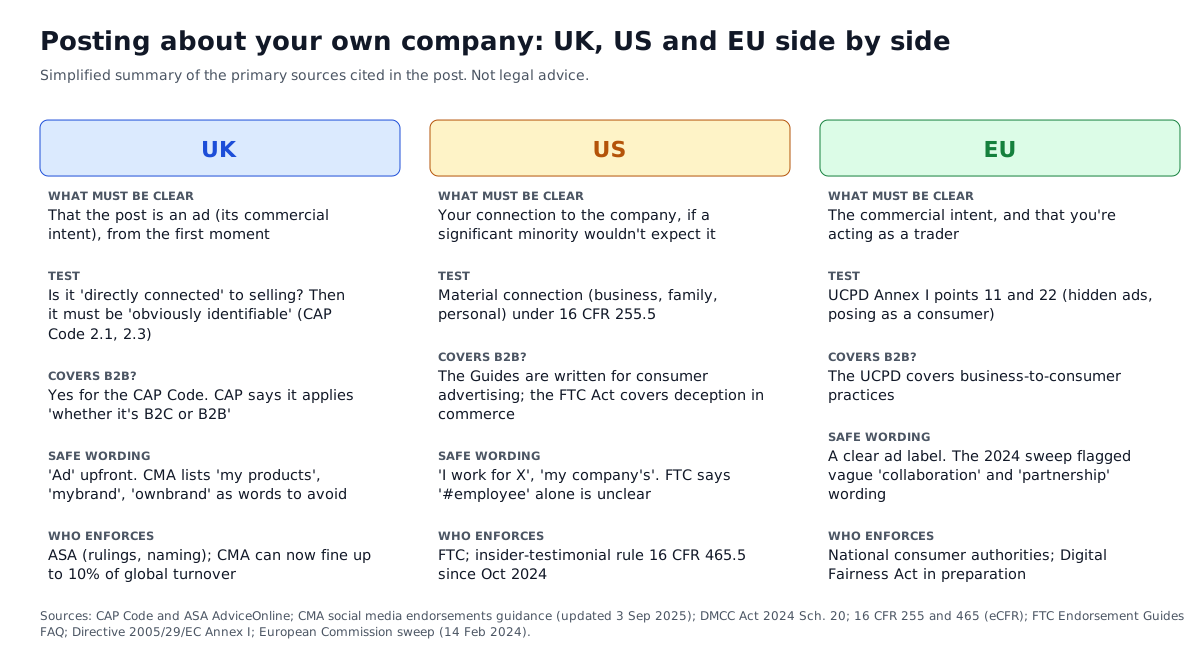
Figure 3. A simplified comparison drawn from the primary sources in the references. Not legal advice.
United States. The FTC's Endorsement Guides apply when a message is one "consumers are likely to believe reflects the opinions... of a party other than the sponsoring advertiser" [30]. If readers know you're the founder, your post is just the company talking. If they might think you're an independent fan, it's an endorsement, and a "business, family, or personal relationship" counts as a material connection. You must disclose that connection "when a significant minority of the audience for an endorsement does not understand or expect" it [31]. In one of the FTC's examples, a doctor appearing in an ad has to disclose owning part of the company [31].
The FTC's FAQ answers the employee question directly. "Listing your employer on your profile page isn't enough." "#employee" probably won't be understood, while "I work for XYZ" or "#XYZ_Employee" is clearer. It adds that it "would be much clearer to use the words 'my company's' or 'my employer's'" [32]. Since October 2024, the FTC's rule on consumer reviews and testimonials has made it a violation for "an officer or manager of a business" to write a testimonial about it without disclosing their relationship, "unless... the relationship is otherwise clear to the audience". "Officers" includes owners [33]. We covered that rule in our FTC post.
So the US test is a little looser than the UK's. Saying clearly that it's your company is usually enough in the US, while the ASA usually expects the post to be labelled as an ad.
European Union. The Unfair Commercial Practices Directive has a list of practices that are always banned. Two of them matter here: paid "editorial content" that isn't clearly marked (point 11), and "falsely claiming or creating the impression that the trader is not acting for purposes relating to his trade... or falsely representing oneself as a consumer" (point 22) [36]. The best data on how this works in practice comes from a 2024 check, which the Commission calls a "sweep". The Commission and authorities in 22 member states, Norway and Iceland looked at the posts of 576 influencers (Figure 4) [37] [38].
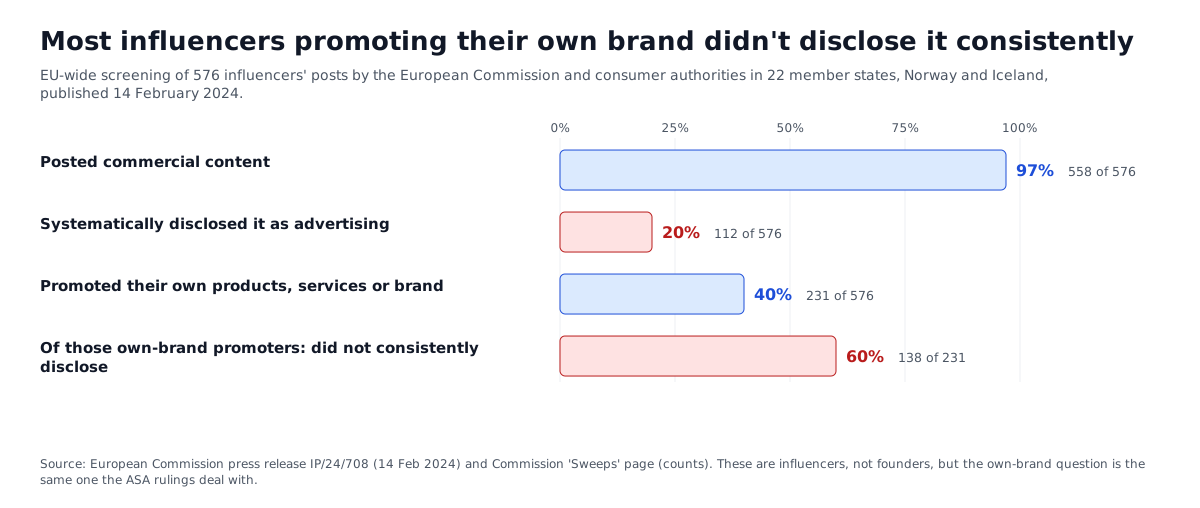
Figure 4. European Commission and national consumer authorities, influencer sweep results published 14 February 2024. The counts come from the Commission's sweeps page.
Of the 576, 97% posted commercial content, but only 20% "systematically indicated" it [37] [39]. Forty per cent promoted their own products, services or brands, and 60% of those didn't consistently disclose it. Many used vague words such as "collaboration" or "partnership" instead of the platform's ad label [38]. The Commission is preparing a Digital Fairness Act, which lists "misleading marketing by influencers" among the practices it aims to tackle [40]. It hadn't been proposed when I wrote this.
Finding 6: if you ask your team to post, you're responsible too
In the US, this has been tested on employees' personal accounts. In 2014, the FTC brought a case against Deutsch LA, the ad agency for Sony's PS Vita. An assistant account executive emailed all staff asking them to help "generate buzz". Employees then "used their personal Twitter accounts to post positive comments", such as "One thing can be said about PlayStation Vita...it's a #gamechanger". The FTC said those comments "were not independent comments reflecting the views of ordinary consumers" [34].
In 2019, the FTC took action against Sunday Riley Modern Skincare. According to the complaint, managers, "including Ms. Riley", posted reviews of the company's products on Sephora's website using fake accounts, or "requested that other employees do so" [35]. The FTC's guides say an employer that has "directed such endorsements" should be "monitoring them and taking other steps to ensure compliance" [31]. The FAQ adds that if you "actively encouraged" employees to post, you're responsible for monitoring them [32].
The UK reaches the same place by a different route. In the Ferry Homely ruling, the ASA treated posts "made by Chloe Ferry (or on her behalf)" as marketing under the brand's control [15]. It has repeatedly held the brand and the person "jointly responsible" [13] [16].
This is where AI comes in. If you draft posts for your cofounder or team with an assistant, or hand them a ready-written post to share, the post is something the company directed. Who typed it doesn't change who it was written for.
Methodology
Finding the rulings. On 29 October 2026, I used the ASA's rulings search to look for rulings matching terms that cover ad recognition and personal connections. These included "Recognition of marketing communications", "obviously identifiable", "commercial intent", "founder", "director of", "own brand", "employee", "shareholder", "commercial interest", "royalties", "investor", "co-founder", "synonymous", "Hinchliffe", "LinkedIn" and "TikTok". That gave 1,092 unique rulings. I downloaded the full text of 544 of them: every ruling on recognition, and every ruling listed under social media that the searches returned. I then filtered for rulings that cited the recognition rules or used the phrase "obviously identifiable", mentioned a social platform, and described a link between the poster and the brand: founder, director, owner, employee, shareholder, own brand or royalties. That left 26, which I read in full.
What counted. I kept a ruling if the ASA assessed whether a post by someone with that link to the brand was obviously identifiable as an ad. That gave 17 rulings and 31 posts. I left out rulings where the link was just a paid influencer deal or affiliate links, and rulings about other issues. The two 2024 rulings on Steven Bartlett's quotes in paid ads were about misleading omission rather than recognition, so I report them separately in Finding 4.
Coding. For each ruling, I recorded the poster's link to the brand, the platform and the outcome for each post. I also coded every cue that the ASA considered and rejected, in seven categories (Figure 2). The coding is my own reading of each assessment. Here are the codes, with breaches over posts: Charlotte Dawson 2021 (owner; followers know, brand tag/code; 1/1), Chloe Ferry (director; nothing; 1/1), Jamie Genevieve (director; my/we, brand tag, hidden behind "more"; 1/1), The Lowcal (director; nothing; 1/1), Prettylittlething (creative director; nothing, followers know; 1/1), Huel 2022 (non-executive director; brief audio cue; 1/1), Ferry Homely (director; hidden label; 1/1), Next (royalties; brand tag, own-brand hashtag, my/we, followers know; 3/3), The Muff Liquor Company (shareholder; own-brand hashtag, followers know; 2/2), Charlotte Dawson 2023 (owner; own-brand hashtag, brand tag/code, followers know, small hashtag; 3/3), Erim Kaur (owner; my/we; 2/3, one cleared), Mrs Hinch notebooks (own range; my/we; 1/2, one cleared), Mrs Hinch Tesco range (royalties; my/we, own-brand hashtag; 1/2, one not an ad), Supreme CBD (owner; nothing; 1/1), TALA (founder-director; followers know, my/we, brand tag, platform feature, mid-video mentions; 6/6), XIX Vodka (owners; brief title card, my/we, followers know; 1/1), Endrick Clothing (director; brand tag; 1/1).
Limits. The ASA keeps rulings on its website "for a period of five years" [2]. That means older rulings that CAP still cites, such as Zoe de Pass (2019) and P&G's "Beauty Recommended" (2015), weren't available to check. The ASA's search is keyword-based, so I may have missed a ruling. Informally resolved cases aren't published at all. Every ruling here followed a complaint about a consumer brand, so the set tells you how the ASA reasons, not how often founders get caught. For the US and EU, I relied on the rules and the agencies' own documents rather than a count of cases.
Practical takeaways
- Sort your posts first. Posts about lessons, hiring, opinions or industry news that don't push your product are probably not ads. Launches, pricing, offers, demos, "we're live", customer wins with a link, and replies recommending your product probably are. If you're unsure, treat it as an ad.
- Put it in the first line. On LinkedIn, and for long posts on X, only the opening lines show before "more". "Ad: we've just launched…" is the safest UK wording, and a clear identifier such as "#ad" is what the ASA told these advertisers to use in future. If you'd rather not, say plainly in the first line that it's your company, as Erim Kaur's cleared post did with "your own brand". Don't hide it in a hashtag at the end.
- Don't rely on your bio, your name or your history. In every ruling where someone argued that followers already knew, they lost. Your post will reach people who've never seen your profile.
- Give your team a ready-made line. For employees, the FTC's suggestions work well anywhere: "I work at [company]" or "my company's". In the UK, add "ad" when the post is selling. If you draft posts for teammates, write the disclosure into the draft so they don't have to remember it.
- Check replies as well as posts. A single reply on X by a brand's owner was found to break the rule. A reply recommending your own product to a stranger is about as clear a case as there is.
- Name your people in ads. If an ad quotes a cofounder, investor or adviser, say who they are.
- If you sell into the EU, assume the same rules apply. The EU's banned practices cover hiding that you're a trader, and the Commission is preparing new rules on influencer marketing.
Where Deynix fits
Deynix is built for "the person whose name is on the account". It drafts posts, replies and quotes in your voice for X and LinkedIn, and publishes to X, LinkedIn personal profiles, Facebook Pages, Instagram and Bluesky. It only publishes what you approve: every draft waits in Review, whether you wrote it in the app or your assistant did through Claude or ChatGPT. On the Pro plan, a personal brand and a product brand run as separate workspaces [42].
That makes Review the right place to apply the takeaways above. Read the first line as a stranger would, and add "Ad" or "my company" where the post is selling. Deynix doesn't decide for you whether a post counts as an ad. That's still your call. When I post about Deynix from my own account, the same rules apply to me.
References
- Advertising Standards Authority. Rulings search, accessed 29 October 2026. https://www.asa.org.uk/codes-and-rulings/rulings.html
- ASA. Non-broadcast Complaint Handling Procedures, paragraph 42. https://www.asa.org.uk/static/d289fa61-8c56-47ab-a41275fb787192ff/Non-broadcast-Complaint-Handling-Procedures.pdf
- CAP AdviceOnline. "Recognising ads: Brand-owned and paid social media." https://www.asa.org.uk/advice-online/recognising-ads-brand-owned-and-paid-social-media.html
- CAP AdviceOnline. "Remit: Social media." https://www.asa.org.uk/advice-online/remit-social-media.html
- CAP News (25 January 2024). "Stay (Linked)In-the-Know to stay compliant." https://www.asa.org.uk/news/stay-linked-in-the-know-to-stay-compliant.html
- Competition and Markets Authority (updated 3 September 2025). "Social media endorsements: guidance for content creators." https://www.gov.uk/government/publications/social-media-endorsements-guidance-for-content-creators/social-media-endorsements-being-transparent-with-your-followers
- Digital Markets, Competition and Consumers Act 2024, Schedule 20, paragraphs 12 and 25. https://www.legislation.gov.uk/ukpga/2024/13/schedule/20
- CMA (7 April 2025). "CMA to boost consumer and business confidence as new consumer protection regime comes into force." https://www.gov.uk/government/news/cma-to-boost-consumer-and-business-confidence-as-new-consumer-protection-regime-comes-into-force
- ASA Ruling on Charlotte Dawson t/a charlottedawsy (22 December 2021). https://www.asa.org.uk/rulings/charlotte-dawson-a21-1122943-charlotte-dawson.html
- ASA Ruling on Chloe Ferry t/a chloegshore1, Chloe1ferry (22 December 2021). https://www.asa.org.uk/rulings/chloe-ferry-a21-1117945-chloe-ferry.html
- ASA Ruling on Jamie Genevieve (22 December 2021). https://www.asa.org.uk/rulings/jamie-genevieve-g21-1110732-jamie-genevieve.html
- ASA Ruling on The Lowcal Ltd (22 December 2021). https://www.asa.org.uk/rulings/the-lowcal-ltd-g21-1121210-the-lowcal-ltd.html
- ASA Ruling on Prettylittlething.com Ltd (13 July 2022). https://www.asa.org.uk/rulings/prettylittlething-com-ltd-a21-1128069-prettylittlething-com-ltd.html
- ASA Ruling on Huel Ltd (10 August 2022). https://www.asa.org.uk/rulings/huel-ltd-a22-1147672-huel-ltd.html
- ASA Ruling on Ferry Homely Ltd (21 September 2022). https://www.asa.org.uk/rulings/ferry-homely-ltd-g22-1157317-ferry-homely-ltd.html
- ASA Ruling on Next Retail Ltd (2 November 2022). https://www.asa.org.uk/rulings/next-retail-ltd-a22-1155318-next-retail-ltd.html
- ASA Ruling on The Muff Liquor Company (8 February 2023). https://www.asa.org.uk/rulings/the-muff-liquor-company-a22-1159956-the-muff-liquor-company.html
- ASA Ruling on Charlotte Dawson (15 February 2023). https://www.asa.org.uk/rulings/charlotte-dawson-g22-1160111-charlotte-dawson.html
- ASA Ruling on Erim Kaur t/a Erim Kaur, erimstagram (8 March 2023). https://www.asa.org.uk/rulings/erim-kaur-a22-1169885-erim-kaur.html
- ASA Ruling on Sophie Hinchliffe t/a Mrs Hinch, G22-1140953 (15 March 2023). https://www.asa.org.uk/rulings/sophie-hinchliffe-g22-1140953-sophie-hinchliffe.html
- ASA Ruling on Sophie Hinchliffe t/a Mrs Hinch, G22-1155720 (15 March 2023). https://www.asa.org.uk/rulings/sophie-hinchliffe-g22-1155720-sophie-hinchliffe.html
- ASA Ruling on Supreme CBD Ltd t/a Supreme CBD (14 February 2024). https://www.asa.org.uk/rulings/supreme-cbd-ltd-g23-1198642-supreme-cbd-ltd.html
- ASA Ruling on We Are TALA Ltd (22 May 2024). https://www.asa.org.uk/rulings/we-are-tala-ltd-g23-1218988-we-are-tala-ltd.html
- ASA Ruling on XIX Vodka Ltd (12 June 2024). https://www.asa.org.uk/rulings/xix-vodka-ltd-a23-1215928-xix-vodka-ltd.html
- ASA Ruling on Endrick Clothing Ltd (8 January 2025). https://www.asa.org.uk/rulings/endrick-clothing-ltd-g24-1264925-endrick-clothing-ltd.html
- ASA Ruling on Huel Ltd (14 August 2024). https://www.asa.org.uk/rulings/huel-ltd-g24-1237493-huel-ltd.html
- ASA Ruling on ZOE Ltd (14 August 2024). https://www.asa.org.uk/rulings/zoe-ltd-g24-1241850-zoe-ltd.html
- ASA Ruling on Kendal Nutricare Ltd t/a Kendamil (5 April 2023). https://www.asa.org.uk/rulings/kendal-nutricare-ltd-g22-1162944-kendal-nutricare-ltd.html
- ASA Ruling on The Trade Desk, Inc (23 September 2026). https://www.asa.org.uk/rulings/the-trade-desk-inc.html
- 16 CFR 255.0, Purpose and definitions (eCFR). https://www.ecfr.gov/current/title-16/chapter-I/subchapter-B/part-255/section-255.0
- 16 CFR 255.5, Disclosure of material connections (eCFR). https://www.ecfr.gov/current/title-16/chapter-I/subchapter-B/part-255/section-255.5
- Federal Trade Commission. "FTC's Endorsement Guides: What People Are Asking." https://www.ftc.gov/business-guidance/resources/ftcs-endorsement-guides-what-people-are-asking
- 16 CFR 465.5, Insider consumer reviews and consumer testimonials (eCFR). https://www.ecfr.gov/current/title-16/chapter-I/subchapter-D/part-465/section-465.5
- FTC. Complaint, In the Matter of Deutsch LA, Inc. (2014). https://search.ftc.gov/system/files/documents/cases/141125deutschcmpt.pdf
- FTC. "Sunday Riley Modern Skincare, LLC; Analysis To Aid Public Comment." Federal Register 84 (25 October 2019). https://www.govinfo.gov/content/pkg/FR-2019-10-25/html/2019-23263.htm
- Directive 2005/29/EC (Unfair Commercial Practices Directive), Annex I. https://eur-lex.europa.eu/eli/dir/2005/29/oj/eng
- European Commission (14 February 2024). "Investigation of the Commission and consumer authorities finds that online influencers rarely disclose commercial content." IP/24/708. https://ec.europa.eu/commission/presscorner/detail/en/ip_24_708
- European Commission. "Sweeps": 2023 sweep on influencers. https://commission.europa.eu/topics/consumers/consumer-rights-and-complaints/enforcement-consumer-protection/sweeps_en
- Reuters (14 February 2024). "Most influencers fail to admit to advertising, EU study shows." https://www.reuters.com/technology/most-influencers-fail-admit-advertising-eu-study-shows-2024-02-14/
- European Commission. "Review of EU consumer law": Digital Fairness Act. https://commission.europa.eu/law/law-topic/consumer-protection-law/review-eu-consumer-law_en
- LinkedIn Help. "Label post as brand partnership." https://www.linkedin.com/help/linkedin/answer/a1627083
- Deynix, homepage, accessed 29 October 2026. https://www.deynix.com
Browse all updates in News.