Founder-led LinkedIn you can keep up.
A weekly cadence from work you already did. You still approve every post. Not a ghostwritten personal brand you never see.
7-day free trial · You approve every post · Works in Claude, ChatGPT or our app
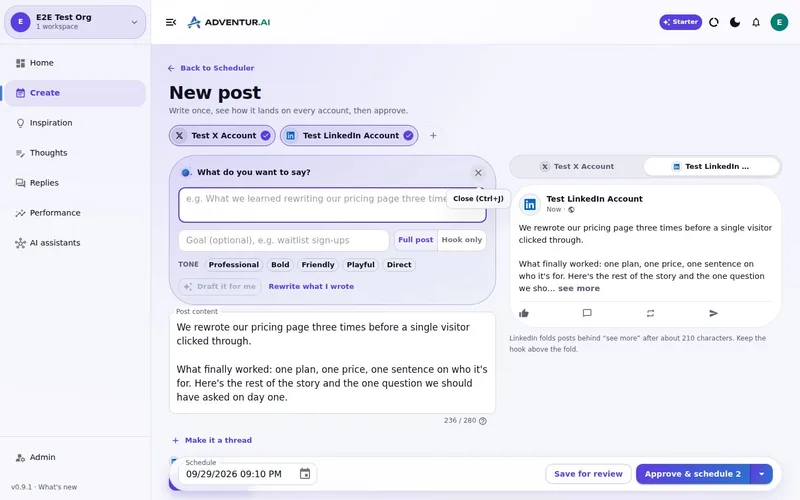

Founder-led dies when it becomes another job
People tell founders to "build in public" as if the constraint were courage. The constraint is usually Tuesday. The product is late, a customer is angry, and the LinkedIn draft will not write itself in the leftover twelve minutes.
So the profile goes quiet. Then a burst of posts after a launch. Then quiet again. That pattern does not look like a person with a point of view. It looks like a company that remembers marketing when it needs a round.
Ghostwriting looks like the fix. Someone else "captures your voice". Then a post goes out that you would not say, about a lesson you did not learn, with a confidence you do not have. Your name is still on it.
Founder-led content only works if two things stay true. The material comes from your work. The last yes is yours.
A weekly cadence a founder can actually keep
Collect while you work, not on Sunday night. When something happens — a trade-off, a support pattern, a hire that nearly failed — save a thought in Deynix or a line in your notes. The future post is that artefact, not a theme you brainstorm later.
Batch once, do not drip-create. Pick a slot in the week. Ask for LinkedIn drafts from those notes. Read them together. This is cheaper, cognitively, than opening a blank composer every morning.
Approve like you are sending a customer email. Would you stand behind this sentence on a call? If not, edit or reject. Fluency is not the bar. Ownership is.
Schedule after that. Publishing in advance is how the cadence survives the next crunch. Scheduling before you have read the post is how ghostwriting sneaks in through the calendar.
Do not outsource the identity. Assistants and teammates can help draft. They cannot replace the founder in an approval-first product without changing what the channel is. Deynix keeps a single review step. Use it.
What you are protecting
The week you actually had
Posts about a specific decision beat posts about 'resilience'. Keep the decision.
A voice people can recognise
If a reader who knows you would not hear you in the second line, it is not founder-led.
A ritual that fits around shipping
One review session can cover several posts. That is the only version that lasts.
The right to say no
Rejecting a draft is success. It means the gate is working.
How Deynix keeps you in the loop without becoming a ghostwriter
Deynix learns the brand and the notes you give it. It drafts LinkedIn posts from that, not from a stock leadership prompt. They wait in Review. You approve. Then they can go on the schedule.
That is an AI marketing employee for a founder who will not hire a personal-brand team, and will not hand the account to a stranger. It removes the blank page. It does not remove you.
It will not auto-post from your changelog, GitHub or Stripe. It will not run an engagement bot on the comments. It will not claim a follower count this page cannot show.
If the goal is sounding human rather than merely being consistent, read LinkedIn posts with AI that still sound like you. If the goal is the personal-brand version of the same posts, read LinkedIn personal branding for founders.
Use one note from this week
Do not start with a content strategy deck. Start with something that happened. Approve it only if you would still sign it.
What this
is for.
Founders who should be visible on LinkedIn and keep dropping the habit when the product needs them.
Turn work you already did into posts, instead of inventing a content persona.
Keep a weekly review ritual short enough to survive a shipping week.
Stay the author of record: every post still needs your approval.
Ask in the chat
you already use.
Connect Deynix to Claude, ChatGPT or Cursor and ask for the week. Your assistant uses your brand, drafts the posts and visuals, and everything waits in Review for you.
See how it connectsYou: Turn what I learned hiring our first engineer into a LinkedIn post and a carousel. Tool call list_top_posts: Story posts lead on LinkedIn Tool call create_carousel: 6-slide carousel · your brand Tool call create_draft_post: LinkedIn draft in Review Agent: The post opens with the mistake, not the lesson. The carousel is attached. Want it on Thursday morning? You: Yes, approve it. Tool call approve_post_group: Scheduled Thu 08:30 LinkedIn post, Pending approval: Our first engineering hire nearly didn't happen. I'd written the wrong job description.
Illustrative demo. Your numbers and drafts will differ.
Three steps
to your first week.
Connect the brand
Point it at your site, social history and Notion so drafts start from real context instead of a blank prompt.
Inspect what it learned
Correct positioning, audience and voice once. That correction applies to every future draft.
Approve the first batch
Scroll, edit or reject. Nothing public goes out until you approve it.
Questions, answered.
What is founder-led content on LinkedIn?
Posts under the founder's name, from the founder's actual work and judgement. It is not a company page blasting features, and it is not a ghostwriter publishing a persona the founder never reads.
How often should a founder post?
Often enough that the profile does not go dark for a month, rarely enough that you can still approve every line. A weekly batch of a few posts is the version most founders can keep.
Can someone else approve for me?
Deynix is built around a solo review step by default. If you are not reading the drafts, it is no longer founder-led. Do not outsource the last yes and still call it your voice.
Updated 19 October 2026
Try it on
a real week.
Connect a brand, ask for a week of posts and approve the ones that sound like you. Nothing publishes until you say so.
7-day free trial · Card needed, cancel any time